



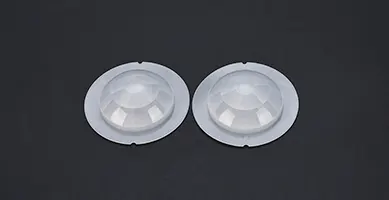
How Does a Fresnel Lens Improve PIR Sensor Detection Range?
Detection range is an important performance consideration for passive infrared (PIR) motion detectors used in security systems, automatic lighting, occupancy monitoring, and smart building equipment. A Fresnel lens helps shape the optical detection pattern by directing infrared radiation from different areas of the environment toward the PIR sensing element.
However, the lens does not determine detection range by itself. Sensor sensitivity, target characteristics, installation conditions, environmental interference, and signal processing also affect the final result. For product developers and purchasing teams, understanding these relationships is essential when sourcing a Fresnel lens for PIR sensors.
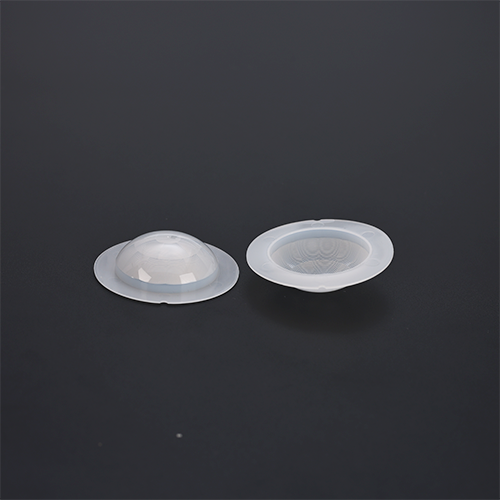
How Does a PIR Fresnel Lens Work?
PIR sensors respond to changes in infrared radiation received by their sensing elements. A Fresnel lens divides the surrounding field into multiple optical zones, directing infrared energy from different regions toward the sensor.
When a person moves across these zones, the infrared signal received by the sensor changes. The electronics process these changes to determine whether motion is present. The lens geometry and segment arrangement therefore influence the detection pattern and how movement is detected within the monitored area.
1. Optical Zones and Detection Coverage
The arrangement of lens segments determines the distribution and orientation of detection zones. A suitable design can help cover the intended monitoring area while limiting unwanted gaps in coverage.
For a custom PIR Fresnel lens, engineers must consider the target coverage area, expected movement direction, mounting position, and sensor configuration. A lens designed for a ceiling-mounted occupancy sensor may not provide the same performance when installed in a different position.
2. Infrared Energy Distribution
The lens directs infrared radiation toward the sensing element according to its optical characteristics. Groove geometry, material properties, surface quality, and alignment all contribute to the optical performance of the assembled system.
A suitable optical design helps distribute infrared energy across the intended detection zones. Nevertheless, actual detection performance must be confirmed through testing because lens characteristics interact with the sensor and the surrounding environment.
3. Detection Distance and Target Movement
Detection distance depends on more than the lens alone. The size and temperature of the target, the temperature contrast between the target and its background, movement direction, sensor sensitivity, and environmental conditions may all affect the result.
For example, a person moving across multiple detection zones may produce a different signal pattern from a person moving directly toward the sensor. Engineers should therefore evaluate the expected movement paths when specifying a Fresnel lens for motion detectors.
4. Installation Height and Field of View
Installation height and mounting angle affect how the optical detection zones are projected into the monitored area. An unsuitable mounting position can cause parts of the target area to fall outside the intended coverage.
For ceiling-mounted sensors, engineers should assess coverage across the floor area and consider obstacles, room layout, and the intended detection distance. For outdoor applications, environmental exposure and potential sources of infrared interference should also be considered.
5. Why Prototype Testing Matters
Optical calculations and simulation provide a foundation for lens design, but real-world testing is necessary to verify the performance of the complete sensing system.
A capable Fresnel lens manufacturer may support several validation stages:
Optical path verification: Assess whether the prototype follows the intended optical design.
Energy testing: Evaluate optical energy distribution against project requirements.
Automated field testing: Record detection responses under defined test conditions.
Long-distance testing: Evaluate detection performance at specified distances and target movement paths.
High-mounted installation testing: Assess coverage under the intended mounting configuration.
Environmental testing: Investigate temperature, humidity, and relevant interference conditions where required.
These tests help engineering teams identify potential issues and make informed design adjustments before production tooling is approved.
How Custom Lens Design Can Support Better Detection Performance
When a standard lens does not meet the application requirements, a custom Fresnel lens supplier can evaluate alternative optical geometries and segment arrangements. The development process typically involves requirement analysis, optical design, simulation, prototype production, performance evaluation, and design optimization.
Any proposed improvement should be verified using agreed test conditions and acceptance criteria. This is especially important when buyers need repeatable performance across different sensor models or installation environments.
What Buyers Should Ask a Fresnel Lens Supplier
Can the lens be designed for our target detection range and field of view?
Can you support optical simulation and prototype development?
What testing methods are available for validating detection performance?
Can the lens be customized to fit our existing sensor housing?
How do you control optical and dimensional consistency during mass production?
Can you support tooling development and long-term OEM supply?
These questions help purchasing teams assess both engineering capability and manufacturing suitability before placing a production order.
Frequently Asked Questions
Does a Fresnel lens automatically increase PIR detection distance?
No. The lens influences optical energy distribution and detection zones, but the final range depends on the complete sensing system and operating conditions.
Can a custom Fresnel lens reduce blind spots?
A customized optical design may help address coverage gaps by adjusting detection zones and lens geometry. The result must be validated through testing in the intended installation environment.
How is PIR detection range tested?
Testing typically uses defined target movement paths, distances, installation positions, and environmental conditions. Consistent procedures help make results meaningful and comparable.
Can manufacturers optimize lenses for outdoor motion detectors?
Yes. Manufacturers can evaluate outdoor application requirements, including mounting conditions and environmental interference. The final lens and sensor system should be tested under representative conditions.
Develop a Fresnel Lens for Your PIR Sensor
Reliable PIR detection requires coordination between optical design, sensor selection, mechanical integration, and performance validation. Our engineering and manufacturing services support customized Fresnel lens projects from initial design through precision tooling and mass production.
Contact Us to discuss your PIR sensor requirements, testing needs, and production plans.