



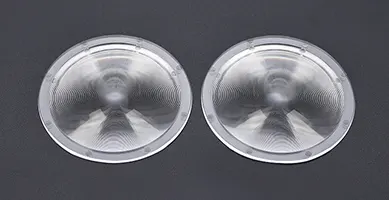
How to Choose the Right Fresnel Lens for PIR Motion Sensors?
Selecting the right Fresnel lens is an important step in developing a reliable passive infrared (PIR) motion detector. The lens influences the sensor's field of view, detection zones, and distribution of infrared energy. An unsuitable design may result in blind spots, inconsistent detection, or performance that does not match the intended application.
For OEM manufacturers, product developers, and purchasing teams, understanding the main selection criteria makes it easier to evaluate a PIR Fresnel lens supplier and specify the right component for production.
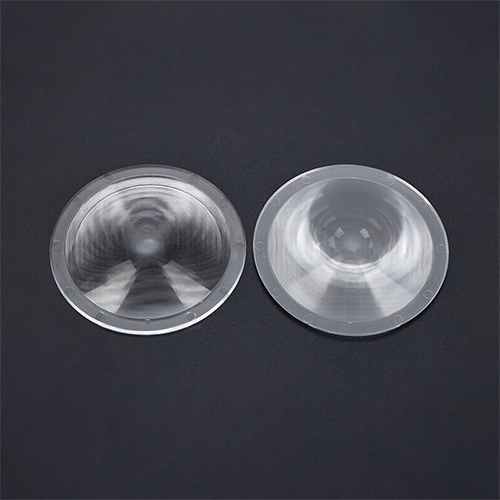
1. Define the Required Detection Range
Start by identifying the target detection distance and the conditions under which the sensor must operate. Detection range depends on several factors, including lens geometry, sensor sensitivity, target movement, installation conditions, and signal-processing design.
Rather than selecting a lens based on a distance figure alone, buyers should provide the manufacturer with the intended detection scenario. This allows the engineering team to evaluate a suitable optical design and establish a practical testing method.
2. Evaluate the Field of View
The field of view determines the area monitored by the PIR sensor. A wide field of view may be suitable for room occupancy or general motion detection, while a more directional detection pattern may be needed for specific monitoring zones.
When sourcing a custom Fresnel lens for PIR sensors, consider the horizontal and vertical coverage, detection zone distribution, mounting orientation, and potential blind spots. The final configuration should be verified through application-specific testing.
3. Consider Installation Height and Mounting Position
Wall-mounted and ceiling-mounted sensors may require different optical configurations. Installation height, sensor angle, target movement direction, and the layout of the monitored space all influence how detection zones interact with the environment.
Provide the lens manufacturer with installation drawings or a description of the intended mounting arrangement. This information helps engineers assess the optical design and determine which prototype tests are necessary.
4. Check Material and Environmental Requirements
Lens material selection should account for the relevant infrared wavelength, optical transmission, mechanical requirements, operating temperature, and environmental exposure. Material suitability must be assessed for the actual sensing application rather than assumed from appearance alone.
For indoor and outdoor sensing products, buyers should also consider sunlight exposure, temperature variation, humidity, and potential interference from environmental heat sources. A capable Fresnel lens manufacturer can help evaluate appropriate materials and validation requirements.
5. Confirm Mechanical Compatibility
A lens must fit the sensor housing and maintain the required position relative to the sensing element. Important specifications include overall dimensions, lens profile, mounting features, tolerances, and assembly requirements.
When requesting a quotation for a custom PIR Fresnel lens, provide technical drawings, three-dimensional files, an existing sample, or other available reference information. Early dimensional review can reduce design changes during prototype development and tooling.
6. Evaluate the Manufacturer's Engineering Capabilities
Not every supplier offers the same level of technical support. For projects involving specialized detection patterns or new sensor products, purchasing teams should assess whether the manufacturer can support the entire development process.
Optical design and simulation.
Prototype development and sample evaluation.
Optical path and energy testing.
Automated field testing under defined conditions.
Precision mold development and injection molding.
Dimensional, appearance, and surface quality inspection.
Choosing a custom Fresnel lens supplier with integrated development and manufacturing capabilities can simplify technical communication and coordination between engineering and purchasing teams.
7. Assess Production Quality and Supply Capacity
For recurring orders, a lens must meet the agreed specifications consistently across production batches. Buyers should ask about inspection procedures, dimensional measurement systems, visual inspection, process controls, traceability, and procedures for managing nonconforming products.
When comparing Fresnel lens manufacturers, also evaluate production capacity, tooling maintenance, sample approval procedures, lead times, and the supplier's ability to support forecast demand. These factors are especially important for long-term OEM supply agreements and high-volume programs.
8. Validate the Lens Before Mass Production
Prototype testing allows engineers to evaluate the lens in the actual sensor system before production tooling is finalized. Testing may include detection distance, coverage pattern, high-mounted installation, outdoor performance, and resistance to relevant environmental interference.
Results should be assessed against clearly defined project requirements. If performance does not meet expectations, the optical design, sensor configuration, installation position, or signal-processing parameters may need further investigation.
Frequently Asked Questions
What is the most important factor when choosing a PIR Fresnel lens?
There is no single factor for every application. Detection range, field of view, sensor compatibility, mounting conditions, and environmental requirements should be considered together.
Can one Fresnel lens work with different PIR sensors?
Compatibility depends on the lens geometry, sensor characteristics, housing design, and required detection pattern. Testing is recommended before using the same lens across different sensor platforms.
Should buyers choose a standard or custom Fresnel lens?
A standard lens may suit an established design if its specifications and performance meet the requirements. A custom lens is worth evaluating when the application requires a specialized detection pattern, mechanical interface, or optical performance.
What should be included in a supplier inquiry?
Include the application, sensor model, detection requirements, field of view, mounting height, available drawings, target order quantity, and expected delivery schedule. This helps the supplier assess feasibility and prepare a more relevant quotation.
Find a Suitable PIR Fresnel Lens Solution
Choosing the right lens requires a balance of optical performance, mechanical compatibility, manufacturing feasibility, and long-term supply requirements. Our team supports customized Fresnel lens development, prototype testing, precision tooling, and injection molding for PIR sensing applications.
Contact Our Engineering Team to discuss your specifications and sourcing requirements.