



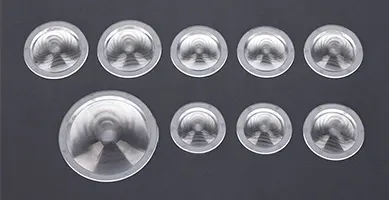
What Is a Fresnel Lens? Working Principle & Uses
A Fresnel lens is a lightweight optical lens designed with a series of concentric or segmented grooves that redirect light or infrared radiation. Compared with conventional lenses, its stepped optical profile can reduce thickness, weight, and material consumption while maintaining specific optical functions. Fresnel lenses are widely used in PIR motion detectors, security systems, automatic lighting, and other infrared sensing applications.
For businesses developing sensing equipment, understanding Fresnel lens technology is essential when selecting a Fresnel lens manufacturer or sourcing customized optical components for OEM and ODM projects.
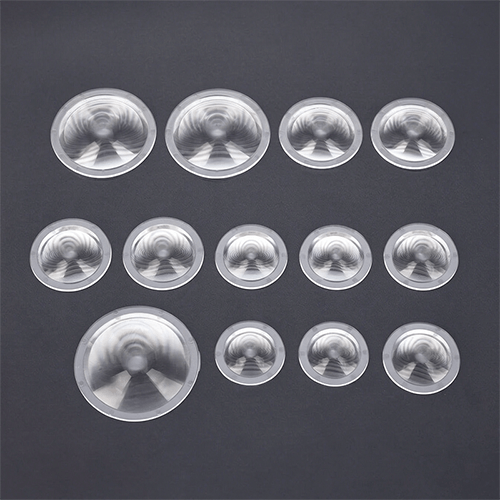
What Is the Structure of a Fresnel Lens?
A Fresnel lens consists of multiple optical sections arranged to achieve a required light-directing or focusing effect. Depending on the application, the lens may feature concentric rings, segmented zones, or a specialized optical pattern. For PIR applications, individual lens segments help define detection zones and direct infrared energy toward the sensor element.
The groove geometry, focal characteristics, material, and overall dimensions must be designed according to the intended application. These parameters are particularly important when developing a custom Fresnel lens for a specific infrared sensor or motion detection system.
How Does a Fresnel Lens Work?
1. Directing Optical Energy
A Fresnel lens redirects incoming light or infrared radiation according to its optical geometry. In PIR sensing systems, the lens helps channel infrared radiation from different areas of the monitored environment toward a pyroelectric sensor.
2. Creating Detection Zones
Many PIR Fresnel lenses contain multiple optical segments that establish separate detection zones. When a person moves through these zones, the infrared energy received by the sensor changes. The sensor electronics analyze the resulting signal variations to identify movement.
3. Matching the Lens to the Sensor
The detection pattern depends on the lens design, sensor characteristics, installation height, mounting angle, and surrounding environment. A suitable lens must therefore be evaluated as part of the complete sensing system rather than as an isolated component.
What Are Fresnel Lenses Used For?
PIR motion detectors: Create optical detection zones for movement monitoring.
Security systems: Support infrared-based intrusion detection.
Automatic lighting: Enable motion-activated lighting controls.
Smart building devices: Support occupancy sensing and energy management.
Industrial sensing equipment: Provide application-specific optical configurations.
What Should Buyers Consider When Purchasing Fresnel Lenses?
For B2B buyers, selecting a lens involves more than comparing dimensions or unit prices. The following factors help determine whether a product is suitable for the intended sensing application.
Optical performance: Confirm the required field of view, detection zones, and sensing characteristics.
Material compatibility: Select a material suitable for the relevant infrared wavelength and operating environment.
Dimensional requirements: Verify lens dimensions, mounting features, and compatibility with the sensor housing.
Manufacturing capability: Evaluate the supplier's optical design, precision tooling, injection molding, and quality inspection capabilities.
Production consistency: Confirm that the manufacturer can maintain stable quality across repeated production batches.
Working with an experienced Fresnel lens supplier can help buyers evaluate these requirements before committing to production tooling or bulk orders.
Why Work with a Custom Fresnel Lens Manufacturer?
Standard lenses may not meet every project's optical and mechanical requirements. A custom Fresnel lens manufacturer can support application-specific development, including optical design, simulation, prototype production, detection testing, precision mold development, and injection molding.
For OEM and ODM customers, this development process helps align the lens with the sensor, housing, and intended installation environment. Prototype validation also provides an opportunity to identify design issues before mass production begins.
When evaluating a potential manufacturing partner, buyers should review its engineering support, testing capabilities, tooling precision, production equipment, and quality control procedures. These factors are important for both new product development and long-term supply arrangements.
Frequently Asked Questions
Is a Fresnel lens the same as a conventional convex lens?
No. A Fresnel lens uses a segmented or grooved optical profile to achieve particular optical functions with a potentially thinner and lighter structure. A conventional convex lens generally uses a continuous curved surface.
Can Fresnel lenses be customized for PIR sensors?
Yes. Custom designs can be developed according to sensor specifications, detection requirements, housing dimensions, and installation conditions.
What information should buyers provide when requesting a quotation?
Useful information includes application details, drawings or existing lens samples, required dimensions, sensor specifications, target detection characteristics, estimated order quantity, and annual demand.
Can a Fresnel lens supplier support bulk production?
A qualified supplier with suitable precision tooling, injection molding equipment, and quality controls can support volume production. Buyers should confirm production capacity, lead times, inspection standards, and minimum order quantities directly with the manufacturer.
Discuss Your Fresnel Lens Project
Looking for a reliable Fresnel lens manufacturer for infrared sensors or PIR motion detectors? Share your drawings, technical specifications, or application requirements with our engineering team to discuss customized development, prototype validation, and mass production.
Contact Our Team to discuss your project requirements.